
Context
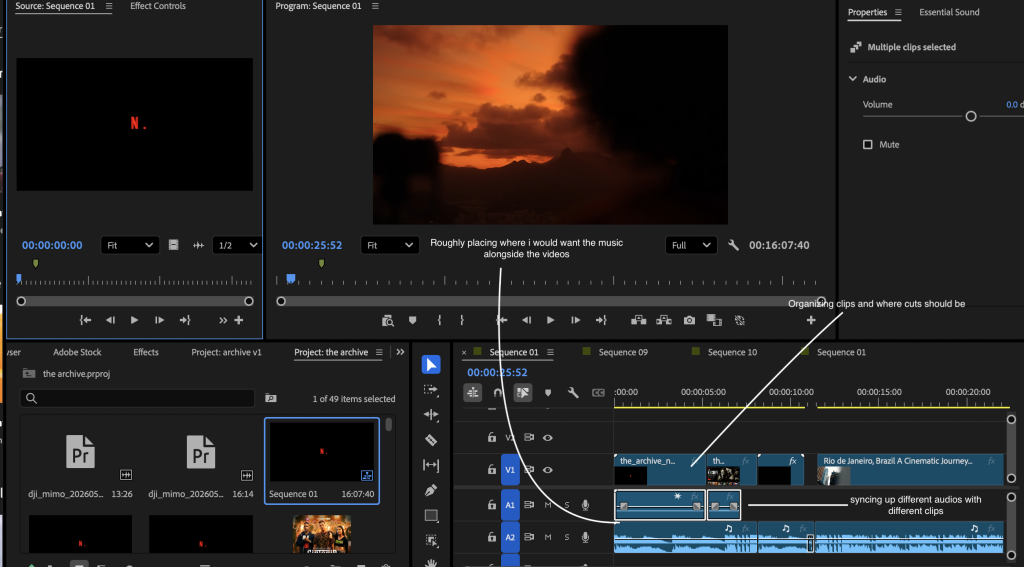
This week I began the editing stage of my FMP, “The Archive.” I started building the structure of the film inside Adobe Premiere Pro.
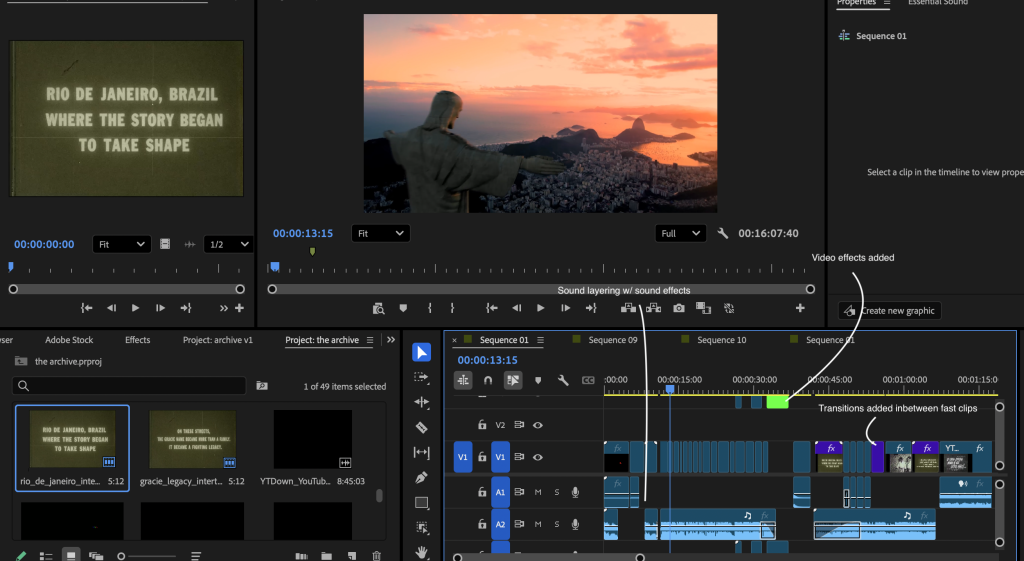
The focus of this week was creating the rough cut of the project, experimenting with pacing, and beginning to shape the visual narrative. I also edited the opening scene of the film, which is important because it sets the tone and atmosphere for the rest of the project.
Alongside this, I gathered additional footage from a Brazilian Jiu Jitsu seminar I attended, giving me more realistic and authentic material to include within the documentary.
The target audience remains 16–30-year-olds interested in cinematic sports storytelling and combat sports culture. Because this audience is used to visually engaging content on platforms like YouTube and social media, I focused on building an edit that feels cinematic and visually layered
Research
Technical
My technical focus was on understanding how professional editors build a rough cut before refining the final version.
I researched editing workflows inside Adobe Premiere Pro, particularly pacing and building atmosphere through sequencing
I also explored how editors use seminar and live-event footage within documentaries to add realism and energy to the final piece.
Since I was working with footage from multiple sources, I also researched how to maintain consistency between clips filmed in different environments.
This research helped me begin shaping the documentary into a more cohesive film.
Story
From a storytelling perspective, this week was about beginning to discover the structure and emotional flow of “The Archive.”
By creating the rough cut, I was able to experiment with:
- clip order
- pacing
- transitions between moments
- how atmosphere builds over time
I also focused heavily on the opening scene, because first impressions are extremely important in cinematic storytelling. I wanted the beginning to immediately establish the tone and mood
The seminar footage also helped strengthen the narrative because it adds more authentic moments from within the BJJ world, making the project feel more immersive.
I researched how sports documentaries structure their opening scenes to quickly draw viewers into the environment.
This helped me understand how to create a stronger introduction for the film.
Style
Stylistically, this week I focused on recreating the cinematic feel that inspired the project during my earlier research.
I continued analyzing things like Nike sport campaigns and NOWNESS films
These references influenced:
- the slower pacing of certain shots
- the use of detailed footage
- atmospheric transitions
- layering different types of clips together
During editing, I focused on making the footage feel cinematic and raw rather than overly polished or commercial.
Practical Skills
This week mainly focused on editing and sequencing footage.
My practical tasks included:
- Importing all organised footage into Adobe Premiere Pro
- Creating the rough cut of the documentary
- Beginning to edit the opening sequence
- Experimenting with pacing and transitions
- Reviewing footage from the BJJ seminar and selecting usable clips
- Organising clips within the timeline to improve workflow
- Testing how different footage types work together visually
This stage helped me begin transforming the project from a collection of clips into an actual film structure.
Evaluation and Reflection
What Went Well
- I successfully began the editing stage of the project.
- The rough cut helped me understand the overall structure of the film better.
- The opening scene is beginning to establish the tone and atmosphere I wanted.
Even Better If
- Next time I would begin experimenting with sound design earlier in the editing process.
- I could improve the pacing of some sections by trimming clips more aggressively.
- I would like to start adding colour grading tests to better define the visual style.
Leave a Reply