
Context
This week, my group and I successfully filmed our two-person interview, which involved managing the live production. I also edited the rest of the groups’ interview videos, refining pacing, audio quality, and camera switching across multiple projects.
The target audience for this project is football fans and young media creators aged 15–25, particularly those interested in sports interviews and sports media production. This audience regularly consumes sports discussion content online, especially on platforms like YouTube, where interviews with players or commentators are common.
The interview was designed to look like a professional studio discussion. This visual style helps separate the subjects from the background while maintaining a clean and modern sports-media look. The final video will be platformed on YouTube.
Research
Technical
To prepare for the production, I researched camera settings, lighting setups, and stabilisation equipment to ensure the recording would look professional.
One important part of this research was understanding the best video settings for studio filming, including frame rate, exposure, and colour profiles.
The cameras were chosen because of their reliable autofocus and strong colour reproduction, which is important when filming interviews with consistent lighting.
I also researched the importance of professional tripods, which are necessary to ensure the camera remains completely stable during long recordings.
Using this equipment helped create a stable and professional-looking interview recording.
Story
For the interview structure, I researched how professional sports interviews are organised so that conversations feel natural and engaging.
One key technique I used was creating “anchor questions.” These are core questions designed to guide the conversation and help the discussion flow smoothly between the two subjects. This approach allows the conversation to feel more natural rather than sounding scripted.
This research helped ensure that the conversation remained engaging, accurate, and relevant to BJJ fans.
Stylistic
Stylistically, I researched professional interview lighting setups to create a balanced and cinematic look.
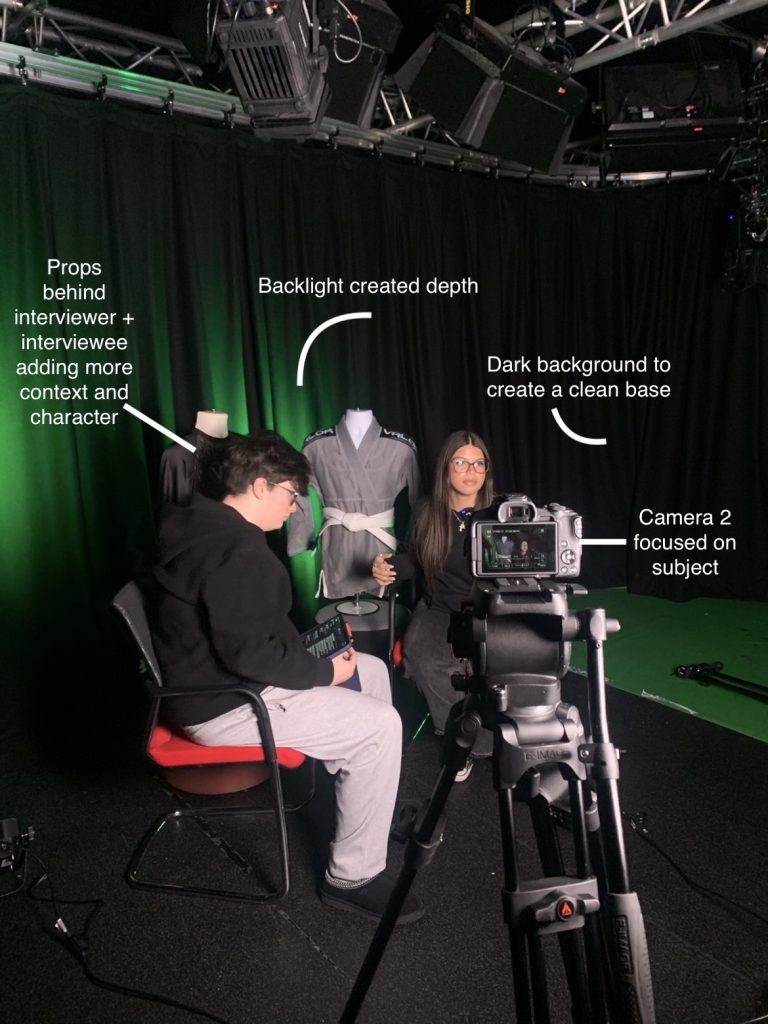
I also took inspiration from interview videos that use coloured LED lighting. In our project, we used green backlighting to separate the subjects from the black curtain background and add depth to the shot.
Finally, I researched multi-camera interview setups, which allow editors to cut between different camera angles and capture reaction shots during conversation.
This stylistic approach helped the interview look more professional and visually engaging.
Practical Skills
During this project, I applied a variety of practical production skills.
First, our group prepared the studio setup, positioning two cameras on tripods to capture different angles of the interview. The lighting was arranged to create a balanced look on both subjects while maintaining the darker background aesthetic.
After recording, I moved into post-production, where I edited the interview footage using Adobe Premiere Pro. I:
- synced the audio with the video footage
- cut between camera angles to maintain viewer interest
- removed unnecessary pauses
- balanced audio levels
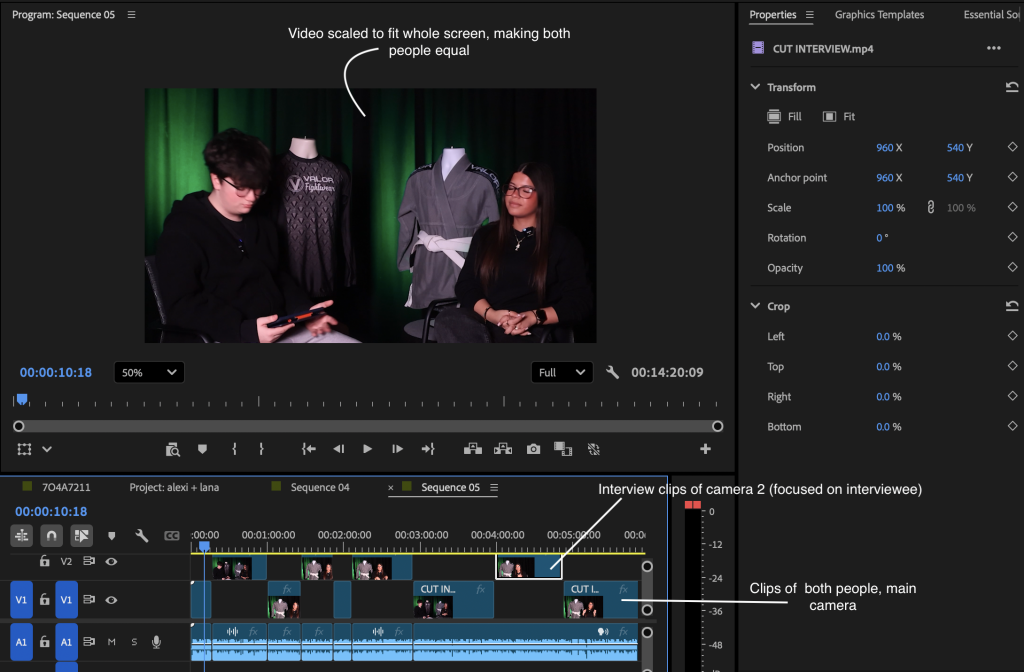
Alongside editing my group’s video, I also continued editing the other groups’ interview projects.
Evaluation and Reflection
What Went Well
- The multi-camera setup worked well and allowed smooth switching between angles.
- The blue backlighting and dark background created a cinematic and professional look.
- Editing both my group’s project and other groups’ videos helped improve my confidence with multi-camera editing.
Even Better If
- Next time I would include a third camera angle to capture wider shots of the discussion.
- The lighting could be improved by adding a soft fill light to balance shadows further.
- I would spend more time on colour correction so that both camera angles match perfectly.
Leave a Reply