
Context
This week, my class produced the first episode of our radio show on Youths Choice, which focused on delivering sports news in a clear, engaging, and professional way. The brief was to plan, produce, and present a radio show. For this show, I took on the role of anchor while also helping with the production and planning process.
The target audience for this show was young listeners aged 15–25 who have an interest in sports and want quick, relevant updates rather than long analysis.
With this in mind, I focused on using clear phrasing, an energetic but controlled tone, and a logical running order that made the show easy to follow from start to finish. The aim was to sound professional while still being engaging and relatable for a younger audience.
Research
Technical
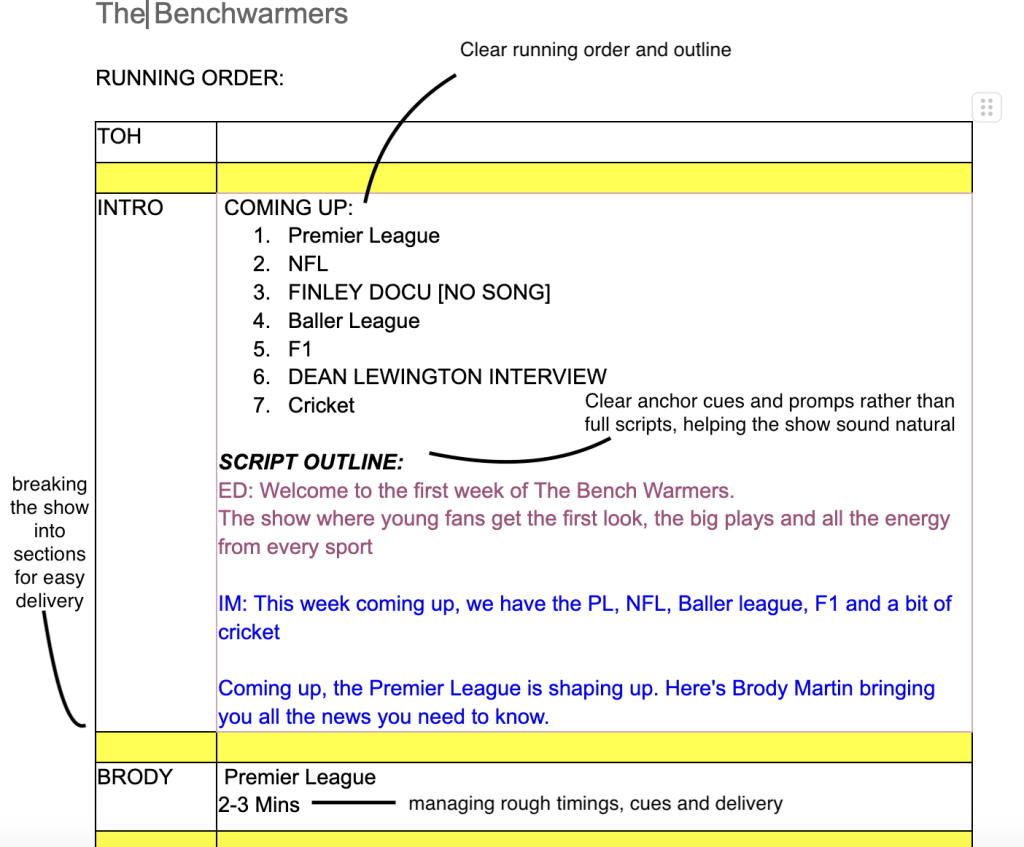
For planning and production, I used Google Docs as the main tool to organise the show. This allowed me to create:
- a full running order
- segment timings
- script outlines
- presenter cues
For broadcasting, we used the radio studio equipment, including microphones, a mixing desk, and studio software—Zetta. Google Docs supported this by keeping the structure visible and easy to follow throughout rehearsals.
Story
I treated it real sports radio bulletin, where information is delivered clearly, quickly, and in a structured order. I approached the task by planning transitions between segments and writing short script outlines rather than full scripts.
I researched how professional sports radio shows organise their content and noticed that anchors usually:
- introduce the show confidently
- guide listeners through each section
- Keep transitions short and clear
- maintain control of pacing
I adapted this approach by keeping my anchor scripts flexible, allowing space for natural delivery while still sticking to the planned structure. I removed unnecessary detail so the show stayed tight and focused on the key stories.
I used the following websites to help navigate how to write and structure my information, just like a real sports bulletin:
Style
Stylistically, I based the show on professional sports radio formats, similar to those used by BBC Radio 5 Live and talkSPORT, which suit a young, sports-focused audience. These shows have confident anchors, fast paced delivery, clear signposting and minimal but effective scripting
Bearing the audience in mind, I aimed for a tone that was authoritative but approachable. I avoided overly formal language and instead used clear, conversational phrasing so listeners could easily follow along. The final show reflected this style by sounding organised, energetic, and professional without feeling scripted or stiff.
Practical Skills
During this week, I developed several practical production and presentation skills, such as show planning, script outlining and anchoring. Here is an example of my work:
Evaluation and Reflection
What Went Well
- The running order was well organised, which helped the show run smoothly from start to finish.
- I delivered my role clearly and helped guide the show without confusion or hesitation.
- The show ran without issues, showing good teamwork and preparation in the studio.
Even Better If
- A full run-through before going live could make transitions even tighter.
- Adding more personal reactions could make the show even more engaging
- Taking on additional technical roles in future shows would help build confidence in studio production.
Leave a Reply