
Context
This week I continued editing and refining my FMP. After creating the rough cut last week, I began improving the overall quality of the film by refining the pace and building atmosphere.
The main things i focused on were,
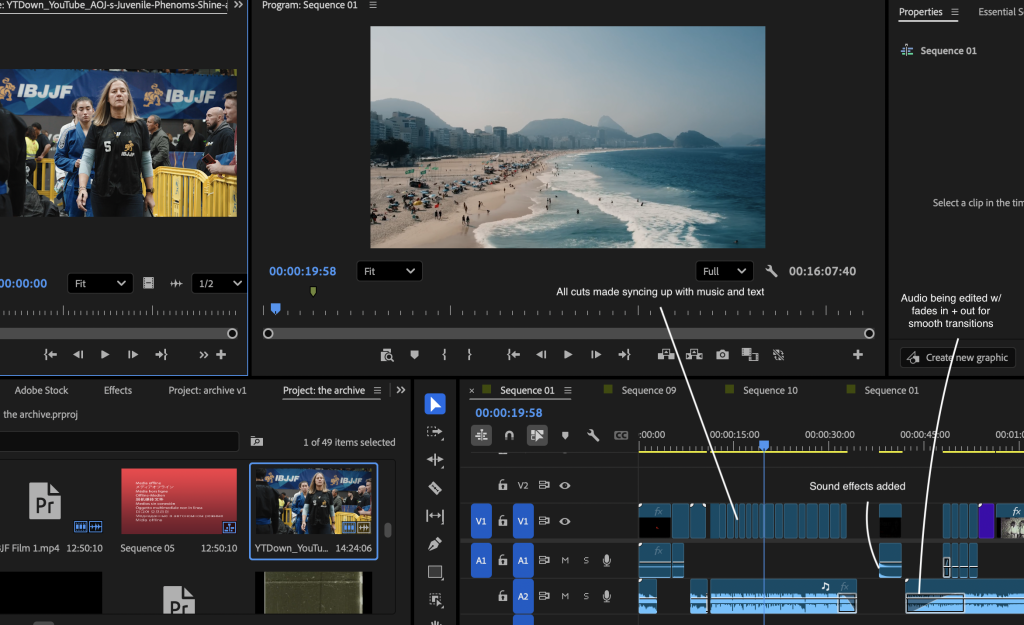
- sound effects
- music syncing
- refining transitions and timing
The target audience is still 16–30 year olds who are interested in cinematic sports storytelling and visually immersive media. Because this audience is highly familiar with modern short documentaries and cinematic sports edits, I wanted the project to feel emotionally engaging and professionally structured.
This week helped move the project from a rough structure into something that feels much more like a complete film.
Research
Technical
This week I focused my technical research on cinematic editing techniques.
I researched how professional editors sync music to visuals, layer sound effects and build emotion through sound design.
I also explored techniques for recording cleaner voice over audio, including microphone positioning and reducing unwanted background noise.
Also, I researched how editors use music pacing and audio transitions to support storytelling within sports documentaries.
This research helped me understand how important sound is in creating atmosphere and emotional impact., including microphone positioning and reducing unwanted background noise.
Additionally, I researched how editors use music pacing and audio transitions to support storytelling within sports documentaries.
This research helped me understand how important sound is in creating atmosphere and emotional impact.
Story
For storytelling, this week focused on making the emotional flow of my film stronger.
The VO became an important tool for helping guide the audience through the project without overexplaining what they are seeing. I wanted the narration to feel reflective, calm and very immersive- rather than sounding like a traditional documentary narrator.
Adding sound effects and carefully synchronising music also helped strengthen storytelling by making certain moments feel more intense or emotional.
I researched how sports documentaries use narration and sound to support visuals rather than dominate them.
This helped me maintain the balance between visual storytelling and narration.
Style
Stylistically, I continued following influences such as
So, from these i took inspiration of their pacing, the use of sound, music timing and cinematic transitions
I focused on creating a film that felt immersive and raw.
The addition of sound effects and music helped push the project further into the cinematic style I was aiming for.
Practical Skills
My practical tasks were mostly done by editing on Adobe Premiere Pro, so things like
- Tightening transitions and improving pacing
- Adding sound effects to create atmosphere
- Synchronising music with visuals and cuts
- Experimenting with timing to improve emotional impact
- Refining the overall structure of the documentary
This stage helped make the project feel much more complete and professional compared to the rough cut.
Evaluation and Reflection
What Went Well:
- Adding sound effects and music made the documentary feel much more immersive.
- The pacing and transitions are becoming smoother and more cinematic.
- The project now feels much closer to a finished documentary rather than a rough edit.
- Syncing music with visuals improved the emotional impact of key scenes.
Even Better If:
- Next time I would spend more time experimenting with advanced sound design techniques.
- I could improve some VO sections by recording additional takes with more variation in tone.
- I would like to develop more detailed colour grading to strengthen the visual identity further.
Leave a Reply